
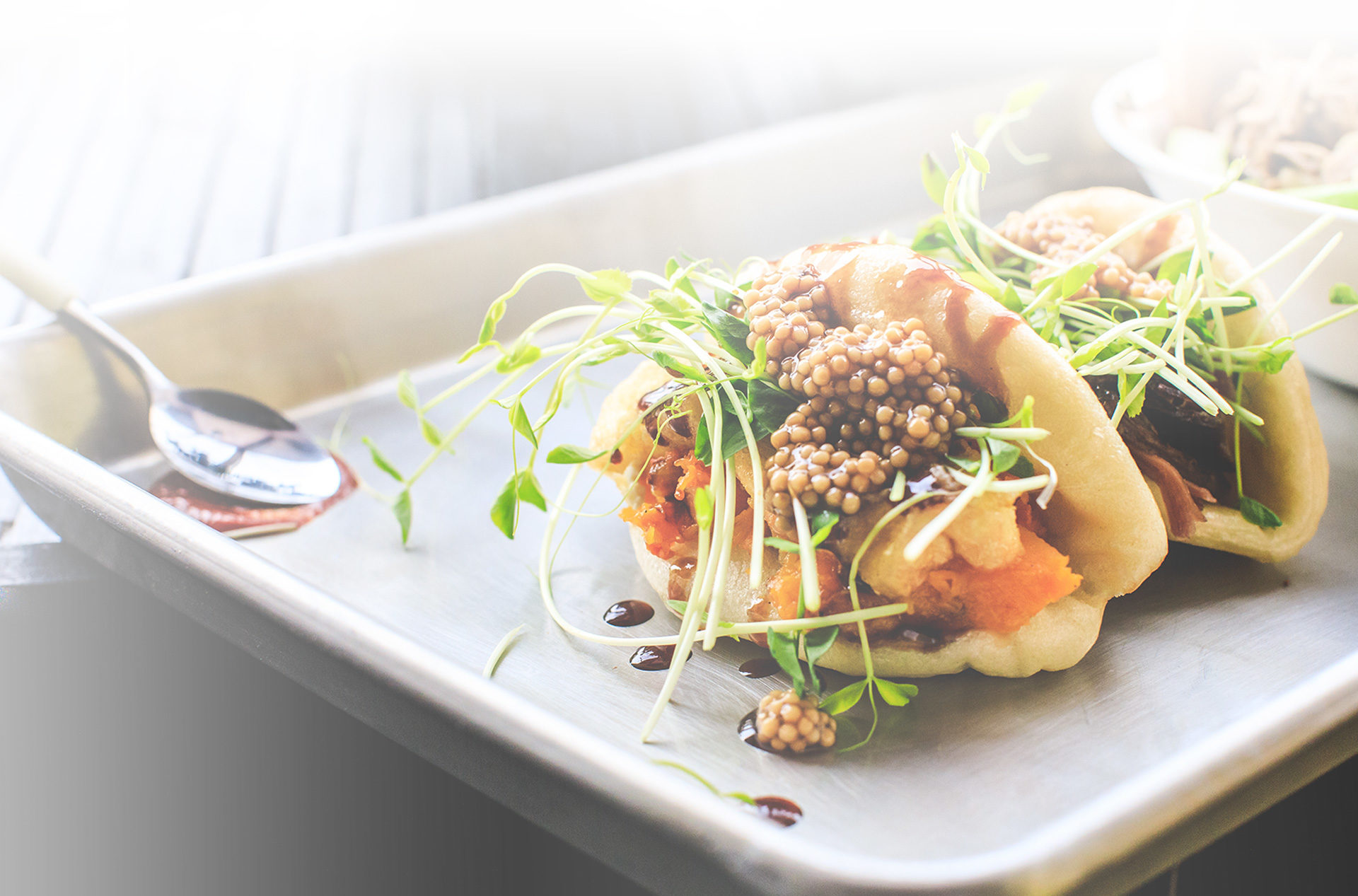

“By adopting a more plant-centric diet, you’re going to be forced to be more creative, or you’re going to be forced to investigate ingredients that you never thought you’d cook with. And as a result, I think it’s actually kind of an expansion of your culinary capacities to cook plant-based.”*
Shane Witters Hicks, Boulder Culinary Arts Graduate, Plant-based Enthusiast & Private Chef/Educator, The Soulful Spread
Program Highlights

Individual Professional Instruction

Entrepreneurial & business-focused

PRACTICAL SKILLS & OPERATIONAL AWARENESS

EMPHASIS ON FOODSERVICE MANAGEMENT & COST CONTROL

Industry Externship

Sustainability & Wellness-Focused

KITCHEN LAB: HANDS-ON ASSIGNMENTS

CAREER PLANNING AND PREPARATION

Nationally Accredited
Plant-Based Cuisine Diploma
42 Weeks

36 weeks of training

6 weeks of industry externship
Curriculum
Plant-Based Culinary Foundations I
In this course, students will be introduced to food safety and sanitation practices in order to prevent foodborne illnesses. They will also be presented with information about food allergens, levels of severity, and measures a chef can take to keep guests safe and included. Additionally, this course will introduce students to the professional plant-based kitchen by familiarizing them with not only traditional culinary tools, utensils, and equipment but also those unique to the plant-based kitchen. They will practice knife safety, cutting techniques, standard measurements and conversions, and basic cooking techniques. But perhaps most importantly, students will classify foods into their food groups to understand basic recipe structures and begin modifying traditional recipes with plant-based substitutions. These concepts will be echoed throughout the entirety of the program.
Plant-Based Culinary Foundations II
In this course, students will continue their plant-based education with the creation of stocks and soups, which will be leveraged in future plant-based dishes. Students will also prepare a variety of legumes and grains that introduce new techniques and flavors to their culinary palate.
Plant-Based Culinary Foundations III
In the final foundations course, students will apply skills and knowledge gained in prior foundations to the preparation of stews. Students will also prepare a variety of plant-based proteins using the appropriate techniques for each. Finally, students will combine all their fundamental culinary skills and apply them to the theory of meal composition. They will design and prepare balanced dishes focusing on meal composition, flavor profiles, and depth of flavor.
Plant-Based Approaches to Wellness
In Plant-Based Approaches to Wellness, students will examine philosophies of wellness unique to plant-based eating such as, Whole Food Plant-Based, Raw, Ayurveda, and Macro. Students will also look at trending diets and how to prepare dishes within a plant-based culinary framework. Moreover, they will explore various ingredient substitutions to accommodate allergy restrictions.
Foundations of Plant-Based Pastry I
In this course, students will be presented with ways to create plant-based frozen desserts as well as techniques to prevent them from freezing solid or becoming gritty in the freezer. They will also prepare fruit based and raw desserts, cookies, bars, and confections using a variety of ingredients such as cream-based sauces, puddings, fillings, nuts, and seeds to name a few. Additionally, students will be introduced to techniques for replacing traditional baking ingredients with plant-based alternatives and how to build flavor in their plant-based pastry dishes.
Foundations of Plant-Based Pastry II
Students will expand upon content learned in Foundations of Plant-Based Pastry I. They will continue their awareness of flavor balance as they use ingredients like fruit purees, for example, to enhance the taste and texture of their plantbased desserts. Students will prepare a variety of plant- based pastries such as cakes, breads, muffins, breakfast foods, truffles, ganache and more. They will also work with yeast allowing them an opportunity to practice folding, rolling, twisting, and cutting dough as they create classic forms that are enriched by seasonings and toppings. Finally, students will modify recipes to accommodate gluten-free diets.
Cultural Influences I
Students will begin their culinary journey around the world in this Cultural Influences I course. They will be exposed to the traditions, customs, and ingredients unique to specific countries such as Japan, Italy, Greece, India, France, and Vietnam. Students will apply the skills that they have cultivated throughout this program to prepare culturally authentic PB dishes.
Seasonal Plant-Based Cuisine
This course explores seasonal plant-based cooking using ingredients available during spring, early summer, midsummer, late summer, fall, and winter. Students will explore ways to find and select seasonally fresh vegetables at supermarkets, farmer’s markets, and the like and how to optimally cook them for the best dining results. Students will also be introduced to the benefits of Farm to Table® cooking and the importance of sustainability practices as they relate to culinary outcomes.
Cultural Influences II
Students will continue their cultural culinary journey in Cultural Influences II. They will be exposed to the traditions, customs, and ingredients unique to specific countries such as Lebanon, the United States, Thailand, Spain, Mexico, and Morocco. Students will apply the skills that they have cultivated throughout this program to prepare culturally authentic plant-based dishes.
Restaurant Operations
Three out of five restaurants fail within five years of opening, often due to money mismanagement; this residential program course gives students the skills to not only keep their restaurant in business but also turn a profit. In this course, students study the hierarchy of management in food service, and the skills needed to succeed as a manager: training employees, motivating them, disciplining them, and creating a safe and positive work environment.
This course explores different types of menus (including both food menus and beverage menus) and their applications. Aspects of menu planning and design, ranging from visual design to price analysis to making use of available resources are covered.
The menu is both a financial tool and a communication tool, and students learn about its uses as both. Students are introduced to accounting and managing budgets, especially as it relates to the hospitality industry. Students learn how to minimize costs and maintain a full range of customer services. This course covers such topics as business planning, pricing, credit management, government regulation, and legal concerns. Business ethics and the crucial role and importance of management and leadership are also covered. For the final project for this course, the student will complete and present a business plan for a foodservice operation.
Entrepreneurship
This course is a culmination course in entrepreneurship. This course covers such topics as business planning, pricing, credit management, government regulation, and legal concerns. Business ethics and the crucial role and importance of management and leadership are also covered.
Externship I
This course provides opportunities for real life experiences in foodservice business and builds on the skills and techniques covered in previous courses. In the course, students apply the skills they have learned in practical ways to real-world situations. Students gain hands-on experience in the kitchen that mirrors their future work in the industry and develops the skills necessary for a culinary career. Immersion in a work environment also allows students to develop industry contacts and build working relationships.
“I just love my classes. I love the Escoffier advisors; they are amazing. The chefs have incredible experiences and they are so willing to share.”*
SUZANNE ARMSTRONG, BOULDER CULINARY ARTS GRADUATE
A Typical Week at Escoffier**
25 hours per week on campus
8 to 15 hours per week for work outside of class
Class format consists of research, planning, discussion, experience, feedback and reflection
Online interface for course materials so all resources are in one place
**Hours per week recommended for academics and school-related activities, depending on the student’s learning style.
Tuition
TOTAL PROGRAM COST:
$26,726*
*Total program cost includes tuition, uniforms (non-refundable), toolkit, and an optional non-refundable technology fee.The cost of books is not included. Students may choose to purchase books when enrolling. For more cost details, see the catalog.
“The chef instructors [at Escoffier] truly care, and they will go out of their way, out of their personal lives, to ensure that students have a quality experience. What more can you ask for from your education?”*