

“I think the best thing is the [Chef Instructors] that were there […] they were just very wise and it had a lot of information to give for a lot of different concepts.”*
Wes Duckworth, Founder/Pastry Chef at Ducks Dozen Artisanal Cookies, Boulder Campus Baking & Pastry Arts Graduate
Program Highlights

Hands-On Training

Small Class Sizes

Classic & Contemporary Techniques

Specialty Diets & Artisanal Baking

Industry Externship

Experienced Chef Educators

Career Services Support

Nationally Accredited
AUGUSTE ESCOFFIER SCHOOL OF CULINARY ARTS GRADUATION*
Pastry Arts Diploma
30 Weeks

24 weeks of training

6 weeks of industry externship
Curriculum
Fundamentals of Baking and Pastry
The Fundamentals of Baking and Pastry begins with course work concentrating on food safety and sanitation in the professional kitchen. The importance of proper hygiene, food handling and storage, cleaning, pest control and HACCP in a food service operation is explored. The course includes baking and pastry mixing methods and ingredient identification. The framework to understand the principles of the following cooking and baking techniques are taught: classic pastry doughs, pâte à choux, fried doughs, pies and tarts, baked custards and stove top custards, quick breads, scones, muffins, cookies, brownies and bars, as well as dessert sauces.
Patisserie
Patisserie begins with learning the classic meringue techniques that lead into the creation of European buttercreams. Students will learn classic mixing methods and piping skills. Specialty dessert cakes and decorated special occasion cakes are a major focus of this course work concentrating on factors related to the baking industry. Frozen desserts and plating are focused in this course. The course includes hand modeling techniques using rolled fondant, gum paste, marzipan, and modeling chocolate. The framework to understand the principles and techniques in the construction of putting together a wedding cake are also covered. Pastry and baking production timelines are examined in this course. Finally, students are introduced to sugar cookery and fresh fruit dessert items. This course provides instruction, examples, and guidance in the following areas: decorating classic European cakes, rolled fondant designed cakes, hand iced specialty cakes, ice cream and sorbet, candied fruit, gum paste flowers, marzipan and modeling chocolate.
Confiserie and Artisian Baking
Artisan Bread provides the framework to understand the principles of the following methods and techniques: the methods of pre-fermentation, biga, and sponge, starting and maintaining a variety of sourdough starters, extended fermentation, the steps of bread production, proper shaping, proofing and scoring, whole grain breads, Italian artisan breads, enriched breads, and special occasion/ holiday breads, puff pastry and laminated dough. Students will explore the proper techniques in buying, storing and melting chocolate, chocolate tempering, chocolate candies, truffles and pralines, nut based candies, cooked sugar based candies and sugar art showpiece design and execution, chocolate molding, chocolate finishing techniques, chocolate decorations, amenity design and execution, chocolate showpiece design and execution.
Global and Contemporary Cuisine
This course highlights modern considerations in the baking industry. Trends in diets and eating habits are constantly changing, and being able to stay on top of them is a key industry skill. Students also learn about cutting-edge trends in dessert composition and contemporary plating techniques, and how to stay current with those. In addition, the course explores different regions’ desserts, as well as their cultural significance and the historical influences that produced them.
Pastry Industry Externship I
This course provides opportunities for real life experiences in an operational restaurant or related business and builds on the skills and techniques covered in previous courses. In the course, students apply the skills they’ve learned in practical ways to real-world situations. Students gain hands-on experience in the kitchen that mirrors their future work in the industry and develop the skills necessary for a culinary career. Immersion in a work environment also allows students to develop industry contacts and build working relationships.

“It’s a wonderful program. I did my first externship at Dollywood and am now working there as a pastry chef. It’s amazing!”*
Amy Archer, Baking & Pastry Arts Graduate
A Typical Week at Escoffier**
25 hours per week on campus
5 to 10 hours per week for work outside of class
Class format consists of research, planning, discussion, experience, feedback and reflection
4 kitchen courses and 6 week industry externship experience
Online interface for course materials so all resources are in one place
**Hours per week recommended for academics and school-related activities, depending on the student’s learning style.
Tuition
$20,757
Total Program Cost*
No Application Fee!
Financial Aid is available to those who apply and qualify
*Total program cost includes tuition, uniforms (non-refundable), toolkit, and an optional non-refundable technology fee. The cost of books is not included. Students may choose to purchase books when enrolling. For more cost details, see the catalog.
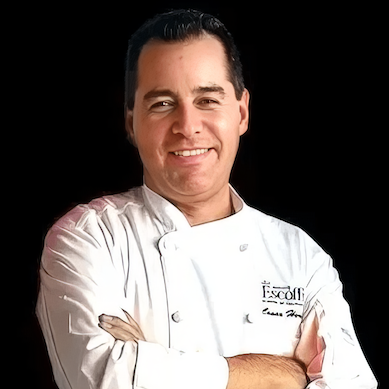
“What I love most about my job is seeing my students progress week after week, and to share the knowledge I once got from my mentors with my students.”*