

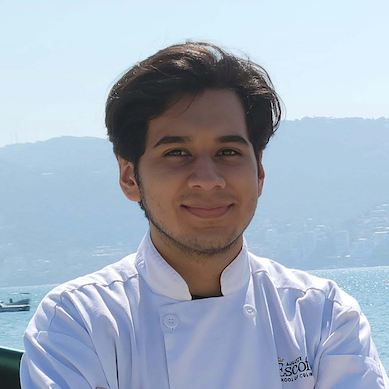
“I would say my choice of going to culinary school instead of a four-year college was worth it. I love cooking, and I wouldn’t have known if I hadn’t taken the chance of trying it first.”*
Oscar Beltran, Boulder Culinary Arts Graduate
Program Highlights

Hands-On Training

Small Class Sizes

Classic & Contemporary Techniques

Farm to Table® Experience

Industry Externship

Experienced Chef Instructors

Career Services Support

Nationally Accredited
Jaqueline Rodriguez Ornelas, Boulder Culinary Arts Student*
Culinary Arts Diploma
30 Weeks

24 weeks of training

6 weeks of industry externship
Curriculum
Culinary Foundations I
This course begins with food safety and sanitation in the professional kitchen, including proper hygiene, food handling, food storage, cleaning, pest control, in a food service operation. Students become acquainted with tools, utensils, and equipment in professional food service and discuss kitchen layout. Fundamental knife skills, cutting techniques, and the concept of mise en place are covered. Production of stocks, soups are included along with an introduction to grain and legume cookery. An introduction to the role of heat in various cooking techniques rounds out a foundational knowledge in culinary arts.
Culinary Foundations II
This course offers a deeper level continuation of understanding of foundational culinary skills. Students will be introduced to various dry-heat, moist-heat and combination-heat cooking technqiues, as well as understand the role of the five Mother Sauces in cuisine. A greater emphasis on knife cuts and accuracy is focused upon, and plating and presentation are introduced to give students the basic skills necessary to advance in a culinary arts education.
Doughs and Leaveners
This course covers ingredient function, leavening agents and mixing methods related to doughs with an emphasis on understanding bakeshop techniques to produce savory results. Production of quick-doughs and batters, flatbreads, yeast-raised-doughs, various formations and related accompaniments.
Culinary Garde Manger
The Garde Manger is responsible for cold foods, including salads, sandwiches, dressings, pâtés, cold hors d’oeuvres, and various buffet items. Students will prepare items to be served cold in a sanitary and appealing way, and learn about various cold kitchen production techniques, including methods of preserving meat and produce.
American Regional Cuisine
Students have the opportunity to gain an understanding of American Regional cuisine by exploring history, traditional and indigenous ingredients, flavor components and cooking techniques. Application of classical and contemporary cooking techniques, plate design, and application of proper sanitation techniques.
Western European Cuisines
Students have the opportunity to gain an understanding of Western European cuisines by exploring history, traditional and indigenous ingredients, flavor components and cooking techniques. Application of classical and contemporary cooking techniques, plate design, and application of proper sanitation techniques.
Farm to Table Experience®
This course provides the students with a hands-on experience on a working farm/ranch or vineyard/orchard. The Instructor conducts the lecture and lab activities to coincide with the harvested item(s) for a catered event executed by the students. Students in the residential delivery of the course, under the direction of a Farmer/Rancher collect or harvest foods and/or proteins for the students’ lab activities.
This class also focuses on the ever-growing relationship between the chef and the farm/factory/ranch. This course will result in a daily lab menu production of selected sustainable and/or organic foods. Also presented will be concepts of traditional and nontraditional farming and sourcing for vegetables, as well as the impact of land and sea animal-based food sourcing as practiced globally.
Student Success Essentials
This course equips students with essential tools and skills to thrive in their culinary studies and prepare for future success in the culinary industry. Students will develop effective time management strategies, refine professional communication skills, and gain valuable insights into available Student and Career Services. The course is designed to set learners on a path toward achieving their academic and professional goals.
Culinary Industry Externship I
This course provides opportunities for real life experiences in an operational restaurant or related business and builds on the skills and techniques covered in previous courses. Externship courses are specific to the area of program concentration and must be completed for each concentration in which a student is enrolled. Externship must be completed for each new program enrollment.

“I was a little country boy, very scared to move away from his little town, let alone a whole different state. [Escoffier staff] took me under their wings and walked me through the process step-by-step. [A staff member] gave me a tour of the campus. She really helped me feel comfortable and safe making that giant step to Colorado.”*
Colton Ragland, Boulder Culinary Arts Graduate
A Typical Week at Escoffier**
25 hours per week on campus
5 to 10 hours per week for work outside of class
Class format consists of research, planning, discussion, experience, feedback and reflection
4 kitchen courses and 6 week industry externship experience
Online interface for course materials so all resources are in one place
**Hours per week recommended for academics and school-related activities, depending on the student’s learning style.
Tuition
Effective February 17, 2026 up to August 17, 2026
$20,141
Total Program Cost*
No Application Fee!
Effective on August 18, 2026, and forward
$20,757
Total Program Cost*
No Application Fee!
*Total program cost includes tuition, uniforms (non-refundable), toolkit, and an optional non-refundable technology fee. The cost of books is not included. Students may choose to purchase books when enrolling. For more cost details, see the catalog.
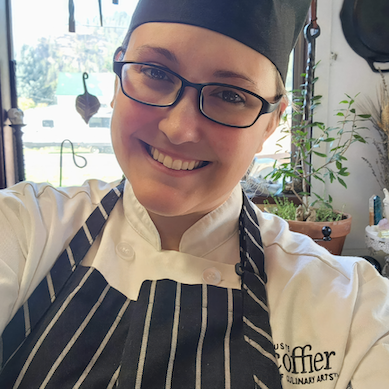
“It has been an amazing journey! The Chef Instructors really want to see you succeed; it’s a breath of fresh air! Love my school!”*